Back to Blogs
PravahERP Blogs
Insights, tips, and industry trends on ERP solutions, business management, and digital transformation.
Insights, tips, and industry trends on ERP solutions, business management, and digital transformation.
Confused between HRMS software and standalone payroll systems in India? Understand the key differences, compliance requirements (PF, ESIC, TDS), cost factors, and scalability benefits to choose the right workforce management solution for your growing business.
As Indian businesses expand, managing employee records, statutory compliance, and attendance through spreadsheets becomes risky. Whether you are an SME, startup, or enterprise, moving to a Cloud-based HRMS or a dedicated payroll tool is a critical business decision.
In India, payroll management is not just about transferring wages. It includes TDS deductions, PF contributions, ESIC compliance, professional tax (PT), incentives and bonus calculations. A wrong choice can lead to heavy penalties.
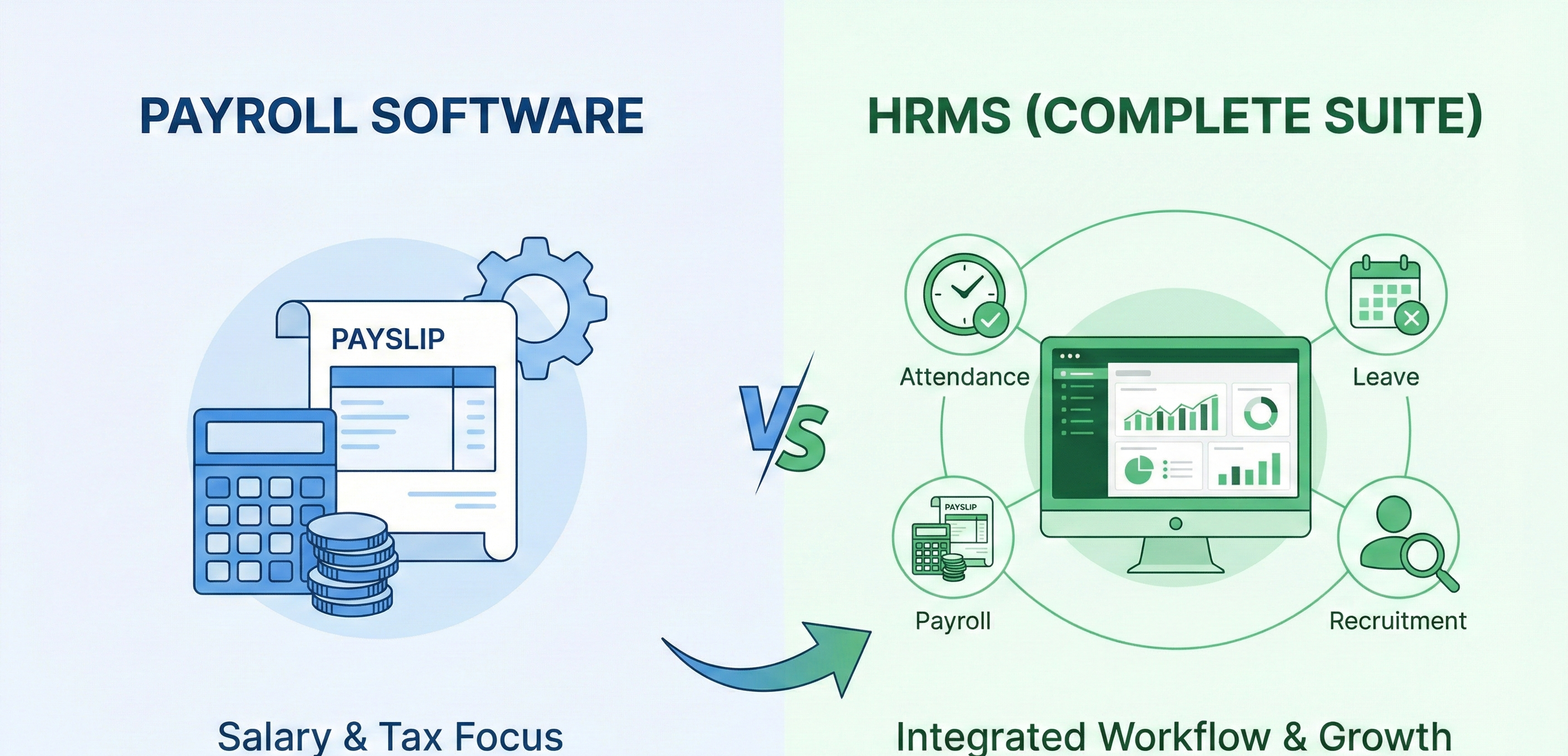
Payroll software is a specialized system designed primarily for automated salary processing. It handles complex calculations, deductions, payslip generation, and bank transfer statements with minimal human intervention.
HRMS (Human Resource Management System) is an integrated platform that covers the entire employee lifecycle. Unlike basic payroll tools, a modern HRMS includes a touchless attendance system that syncs real-time data directly with payroll.
A comprehensive solution usually includes:
| Feature | Standalone Payroll | Integrated HRMS (e.g. Pravah HRMS) |
|---|---|---|
| Salary Processing | Monthly Processing | Automated Real-Time Processing |
| Attendance Integration | Manual Upload Required | Touchless Sync |
| Leave Management | Not Available | Automated Workflow |
| Overtime Management | Not Available | Automated Approval Flow |
| Hiring Process | Not Available | Complete Recruitment Flow |
| Scalability | Limited | Designed for Growth |
Cost is a major deciding factor. Standalone payroll software in India typically operates on a Per-Employee-Per-Month (PEPM) model, often ranging from ₹50 to ₹100 PEPM. This is cost-effective for very small teams but lacks automation.
In contrast, full-stack Cloud-based HRMS solutions generally range from ₹150 to ₹300 PEPM. While the initial subscription costs are higher, they eliminate hidden costs such as manual HR data entry, compliance errors, and the need for separate leave management tools, providing better ROI.
If you run a small business with fewer than 10 employees, basic payroll software is sufficient. However, if your organization is growing rapidly or requires a robust attendance system, investing in a scalable HRMS is the smarter choice.
In summary, standalone payroll tools are suitable for very small teams, while HRMS platforms provide automation, scalability, and compliance support for growing Indian businesses.
Move beyond spreadsheets. Implement a modern solution designed for Indian compliance.
Contact UsGet started with PravahERP today and experience the power of integrated ERP solutions.