Back to Blogs
PravahERP Blogs
Insights, tips, and industry trends on ERP solutions, business management, and digital transformation.
Insights, tips, and industry trends on ERP solutions, business management, and digital transformation.
As businesses grow, managing employees and managing customers become equally important. Many companies get confused between Lead Management Software, CRM, and HRMS, assuming they are the same systems. In reality, all three serve different purposes but together they create a complete business management ecosystem.
Understanding the difference helps business owners invest in the right software at the right time and avoid unnecessary expenses.
Lead Management Software is designed specifically for handling inquiries and converting prospects into customers. It focuses only on the sales entry point — capturing and tracking leads.
Whenever a customer contacts a business through a website form, WhatsApp, Facebook ads, phone calls, or walk-ins, the system records the inquiry automatically.
Main functions:
It ensures no inquiry is ignored and every potential customer receives timely communication. It is ideal for companies that receive daily inquiries and want better conversion rates.
A CRM system is a broader platform that starts where lead management ends. After a lead converts into a customer, CRM manages the entire customer lifecycle.
CRM stores customer history, quotations, orders, payments, service support, and communication records. It helps businesses build long-term relationships and repeat sales.
Main functions:
While lead management focuses on getting customers, CRM focuses on keeping customers.
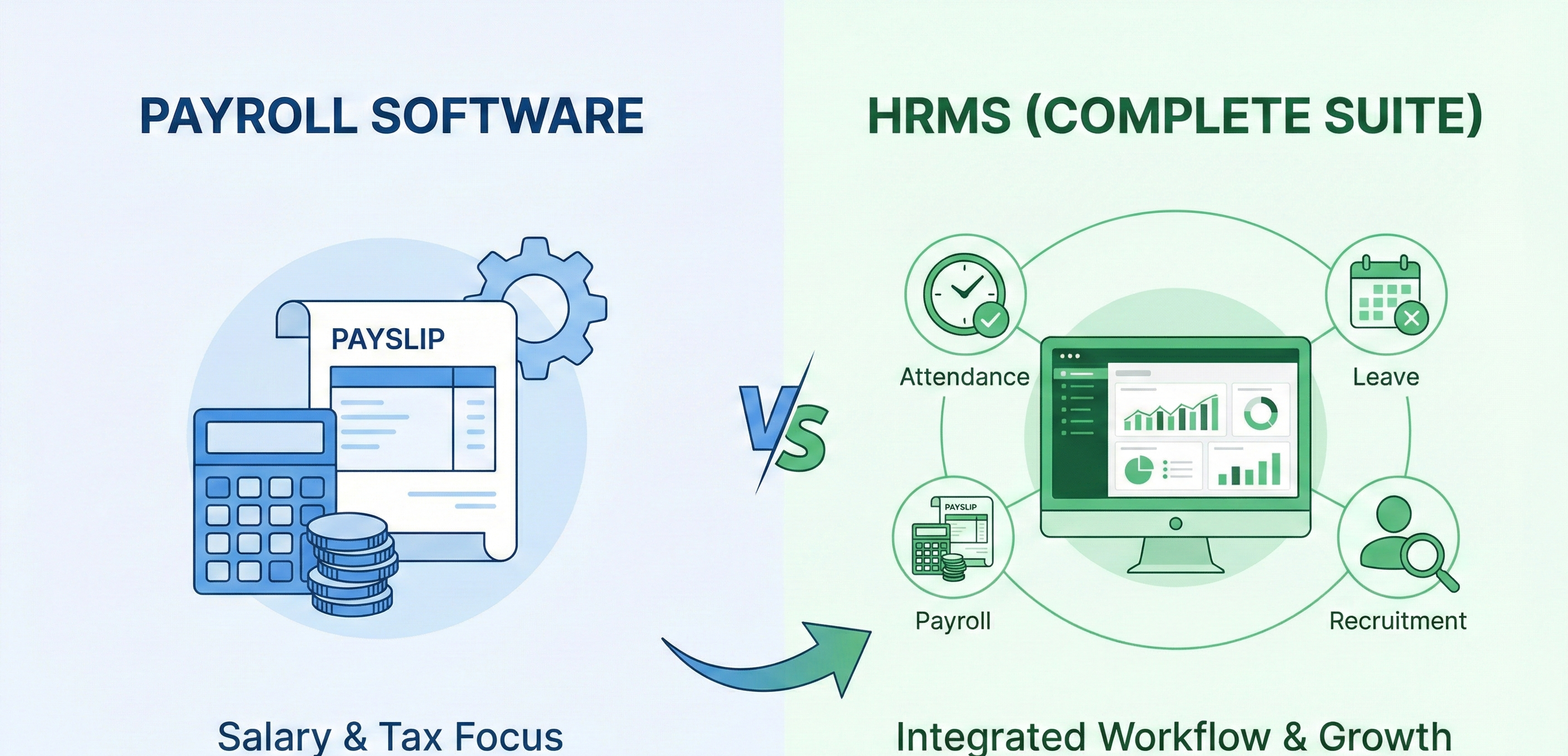
A HRMS manages employees instead of customers. It is used by the HR and accounts departments to handle staff attendance, salary, and compliance.
As companies grow, employee records, payroll calculations, and attendance tracking become complicated. HRMS automates these operations.
Main functions:
HRMS improves internal efficiency and reduces manual paperwork.
| Feature | Lead Management Software | CRM | HRMS |
|---|---|---|---|
| Purpose | Capture & track leads | Manage customers & sales | Manage employees |
| Users | Sales Team | Sales + Management | HR + Accounts |
| Focus | Lead Conversion | Customer Relationship | Employee Operations |
| Data Type | Prospects | Customers | Employees |
| Main Outcome | More Leads | Higher Revenue | Operational Efficiency |
For a growing company, these systems complement each other.
For example, a construction equipment rental company receives enquiries. The sales team handles leads through lead management software. Once a deal is finalized, CRM generates quotations and tracks payments. The staff handling installation, billing, and support are managed through HRMS payroll and attendance.
Together, they form a complete digital workflow.
Small businesses often begin with lead management, then adopt CRM, and finally implement HRMS as the workforce expands.
Implementing all systems provides strong operational control:
Management can monitor both revenue and staff performance from structured reports instead of manual registers.
If your business receives daily inquiries but struggles with follow-ups, start with Lead Management Software. If you want to manage long-term customer relationships and sales pipelines, CRM is the better choice. If your company is growing with more employees and compliance requirements, HRMS becomes essential.
Many modern businesses eventually use all three systems together for complete operational control.
Lead Management Software, CRM, and HRMS are not competing tools — they solve different business problems. Lead management helps acquire customers, CRM helps retain customers, and HRMS helps manage employees.
Businesses that integrate these systems operate more professionally, reduce dependency on individuals, and create scalable processes. In today’s competitive market, companies using digital systems grow faster because they manage both customers and employees efficiently.
Choosing the right combination ensures not only sales growth but also stable internal operations, ultimately leading to long-term business success.
Track leads, automate follow-ups, and close more deals with Pravah CRM.
Contact UsGet started with PravahERP today and experience the power of integrated ERP solutions.